Specialist Will Dispute Lawyers in Melbourne
Contested Wills and Estate Dispute Lawyers, Melbourne
We help people contest Wills, challenge unfair provisions, and resolve executor disputes fast.
We help people contest Wills, challenge unfair provisions, and resolve executor disputes fast.

Contesting a Will in Victoria
Most people who contact us about a Victorian estate believe they have already run out of time. Often they have not.
In Victoria the time limit for a family provision claim does not run from the date of death. It runs from the date probate is granted. If probate has not yet been granted, the clock has not started. If it has, you have six months from that date.
That single difference is why it is worth getting advice before you assume the question is closed.
The Victorian time limit, and why it catches people out
An application for a family provision order in Victoria must be made within six months after the date of the grant of probate of the will, or of letters of administration.
Two things follow from that. First, the six months may not have started. Probate is often granted months after a death, and in some estates it is never applied for at all. Second, if the six months has already passed, the Court can extend the period — but only while the estate has not been finally distributed. Once the estate has been distributed, that door closes.
This is the practical reason to move early rather than wait: not because the deadline is short, but because the estate can be distributed while you are deciding.
Here’s How We Can Help

Who can make a claim in Victoria
Victoria does not simply list categories of relative. The question is whether you are a person the deceased had a responsibility to provide for, and whether the will made adequate provision for your proper maintenance and support.
That covers spouses and domestic partners, children including adult children and stepchildren in some circumstances, former spouses in limited circumstances, registered caring partners, grandchildren and members of the household who were dependent on the deceased.
Being an adult, being employed, or having received something under the will does not by itself end the claim. What matters is the relationship, your circumstances and the size of the estate.

Victoria does not simply list categories of relative. The question is whether you are a person the deceased had a responsibility to provide for, and whether the will made adequate provision for your proper maintenance and support.
That covers spouses and domestic partners, children including adult children and stepchildren in some circumstances, former spouses in limited circumstances, registered caring partners, grandchildren and members of the household who were dependent on the deceased.
Being an adult, being employed, or having received something under the will does not by itself end the claim. What matters is the relationship, your circumstances and the size of the estate.
What the Court looks at
The Court considers the nature of your relationship with the deceased, any obligations the deceased owed you, the size and nature of the estate, your financial resources and needs both now and in the foreseeable future, your age and health, any contribution you made to the deceased’s property or welfare, and the competing claims of other beneficiaries.
It is a comparison, not a formula. Two people with the same relationship to a deceased can get very different answers depending on what they need and what the estate holds.
Get Clear Advice to Resolve Will and Estate Disputes – Book Your Consultation Today.

Get Clear Advice to Resolve Will and Estate Disputes – Book Your Consultation Today.
Contest a Will and Family Provision claims
Where the case is heard, and how we act
Family provision proceedings in Victoria are commenced in the Supreme Court of Victoria. Most are resolved at mediation rather than at a hearing. Mediation is compulsory in practice, and the majority of estate disputes settle there.
Our Melbourne office acts in will and estate disputes throughout Victoria. We act both for people making claims against estates and for executors defending them. You can read our will and estate disputes overview for more on how we work. Our first step is a short conversation to work out whether probate has been granted, what the estate holds, and whether you have a claim worth making — before anything is said to the family.


We’re Wills & Estate Lawyers With a Record of Proven Results in Protecting Assets and Resolving Disputes
We’ll explain your position clearly, and give you a practical roadmap for moving forward
01
Family Provision Claims
03
Executor and Probate Disputes
05
Mediation and Negotiation
02
Will Validity Challenges
04
Superannuation Death Benefit Disputes
06
Supreme Court Applications
Your Solution Starts With a Consultation
Practical Wills & Estate Solutions That Protect Assets, Prevent Disputes & Reduce Stress Without Unnecessary Legal Costs

Consult
Book a free 15-minute chat to review your situation and options.



Plan
We create a tailored strategy and take action, like issuing a demand.



Resolve
We negotiate, mediate or litigate to secure the best outcome.
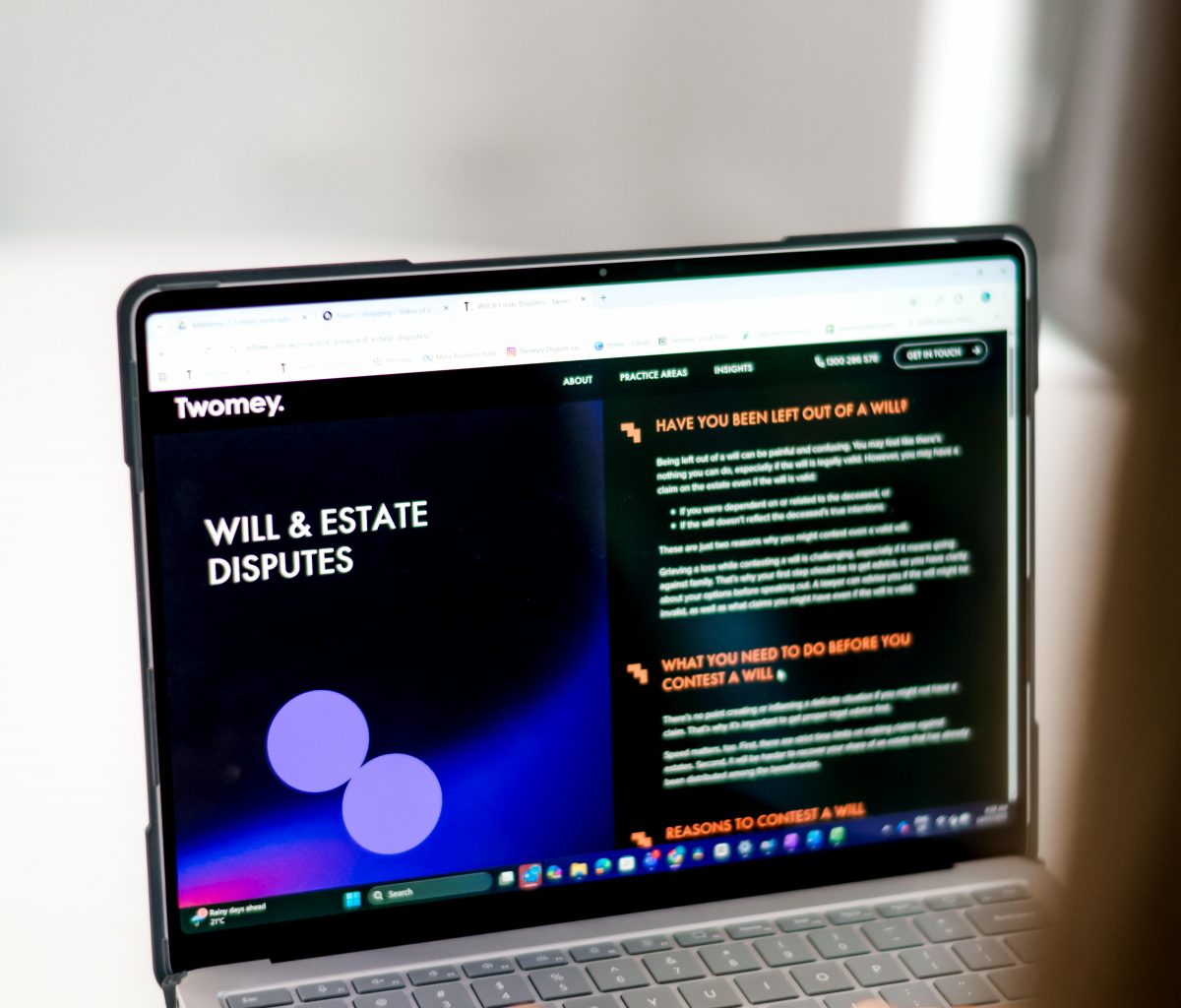

Real Stories, Real Results, Real Peace of Mind From Families Who’ve Been Where You Are
Baihn Constructions
★★★★★
“TDL’s expertise in the building and construction industry have been invaluable to our growing business. They have been a trusted partner in helping us navigate contracts and adopt smart business practices to support complex situations with confidence. We highly recommend their services!”
Eco-Essence Homes
★★★★★
“TDL are exactly who they say they are and do exactly what they say they will do for you. The outcomes we have had with TDL have far exceeded our expectations and we would not hesitate in recommending TDL to any construction industry participant who needs help to solve an issue, no matter how big or small.”
Speak to a Melbourne will dispute lawyer
The first question is whether probate has been granted
If you have been left out of a Victorian will, or left less than you expected, the first question is whether probate has been granted. Tell us that and we can tell you where you stand. Book a 15-minute consultation or call 1300 286 578.
Questions people ask
Six months from the date probate or letters of administration were granted. Not six months from the death. If probate has not been granted yet, the period has not started.
Possibly. The Court can extend the time, including after it has expired, but an application to extend must be made before the estate has been finally distributed.
Yes. Receiving a share does not prevent a claim. The question is whether what you received was adequate provision for your proper maintenance and support.
Usually not. Proceedings are commenced in the Supreme Court, but most Victorian estate disputes are resolved at mediation without a final hearing.
That depends on the estate and how contested the claim is. We will tell you what we think it will take, and what the realistic range of outcomes is, before you commit to anything.
We also act in other states. If your matter is in New South Wales, see contesting a will in Sydney; if it is in Queensland, see contesting a will in Brisbane.
Where we act in will and estate disputes
We act for families and executors in will and estate disputes across Victoria, New South Wales and Queensland, from our offices in Melbourne, Sydney, Brisbane and the Gold Coast.
Melbourne
Ground Floor, 116 Hardware Street
Melbourne VIC 3000
1300 286 578
Sydney
Suite 18, Level 14, 3 Parramatta Square
153 Macquarie Street
Parramatta NSW 2150
1300 286 578
Brisbane
Suite 1b, 247 St Pauls Terrace
Fortitude Valley QLD 4006
1300 286 578
Gold Coast
Burleigh Commercial Centre
17/99 West Burleigh Road
Burleigh Heads QLD 4220
1300 286 578
This page is general information, not legal advice. Time limits and eligibility depend on your circumstances.
Fill Out Your Details to Secure Your Appointment

Twomey Dispute Lawyers acknowledges the Traditional Custodians of country throughout Australia and their connections to land, sea and community. We pay our respect to their Elders past, present and emerging. We extend that respect to all Aboriginal and Torres Strait Islander peoples today, and recognise their important contribution in creating a strong and vibrant Australian society.